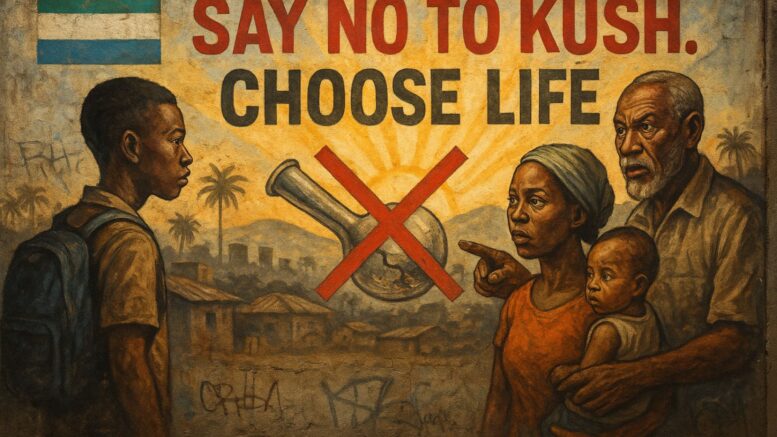
Kush is destroying Sierra Leone’s youth
By Austin Kanjia, Managing Editor
Synthetic cannabinoids are killing our youth, destabilising communities, and damaging Sierra Leone’s national image. Known locally as kush, this dangerous drug has become one of the most alarming public health threats in recent years. Unless government, civil society, and families act together, the damage will continue to spread.
 What synthetic cannabinoids are doing to young lives
Unlike traditional cannabis, synthetic cannabinoids are laboratory-made chemicals that mimic THC—the active ingredient in marijuana—but with unpredictable and often fatal effects. These drugs are sold under names like kush, spice, or K2, and they pose severe health risks, including seizures, hallucinations, psychosis, and death.
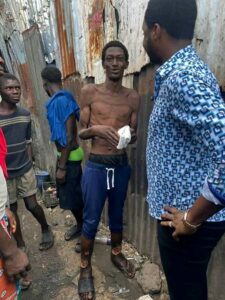
In Freetown, Waterloo, and beyond, young people are dying in growing numbers. Some have been found lifeless in alleyways and behind homes. Others suffer long-term mental health issues after even a single use. Shockingly, despite witnessing their peers perish, many young people continue to seek out kush rather than report its dealers.
A local health worker stated, “We are watching a generation disappear before our eyes, and still there are no proper facilities to save them.”
Why Sierra Leone must invest in treatment
Despite millions allocated to fight drug use, Sierra Leone has yet to build a single government-funded rehabilitation centre. Without these critical facilities, recovery remains out of reach for most users. Organisations that specialise in drug rehabilitation exist, but they receive little or no government support.
For instance, civil society groups have called for increased government collaboration, but funding and policy implementation remain weak.
Additionally, corruption has crippled enforcement. Law enforcement officers accused of participating in kush distribution are rarely punished. Citizens say that anti-drug operations too often prioritise photo opportunities over long-term results.
Learn more about Sierra Leone’s public health strategy at Ministry of Health and Sanitation.
How to fight synthetic cannabinoids
Sierra Leone must adopt a multi-pronged response to synthetic cannabinoids. First, the President must directly assess the performance of the Ministry of Social Welfare and verify how funds have been spent. Next, the government must work with schools, NGOs, and communities to:
- Build and operate at least 16 rehabilitation centres nationwide
- Launch targeted awareness campaigns focused on the dangers of synthetic cannabinoids
- Train teachers and community leaders to identify early signs of drug use
- Enforce anti-corruption measures for public officials involved in drug trafficking
If these measures are not taken, the crisis will continue to spiral.
A stronger policy can reduce synthetic drug abuse
To weaken the black market, Sierra Leone should consider a clear regulatory framework for controlled cannabis production, as seen in neighbouring countries. Legitimate systems can reduce incentives for illicit distribution and allow better tracking of drug use trends.
Furthermore, law enforcement officers caught collaborating in the kush trade must be punished or reformed through the same rehabilitation systems proposed for drug users. Justice must be equal to be effective.
Synthetic cannabinoids will not go away on their own. Strong laws, public awareness, and treatment opportunities are the only sustainable solutions.
The time to act against synthetic cannabinoids is now
Kush is eroding Sierra Leone’s future. Synthetic cannabinoids are not just a health crisis—they are a national emergency. Families, schools, faith groups, and the government must act as one.
“We’ve talked long enough,” said a community leader. “Now we must build, treat, and protect.”